
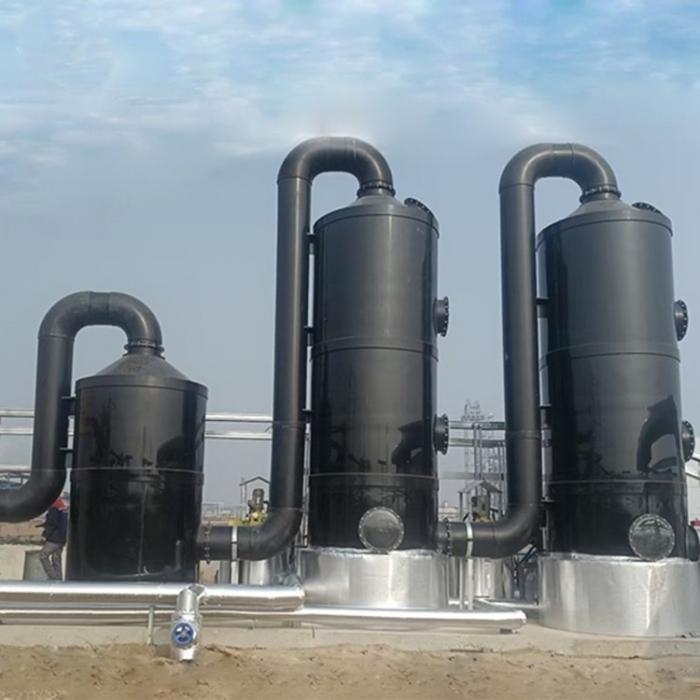
| Name: | Wet Scrubber PP Anti-static Spray Tower Corrosion Resistant Waste Air Purification Absorption Equipment |
|---|---|
Product Description
PP Anti-static Spray Tower Corrosion Resistant Wet Scrubber Waste Air Purification Absorption Equipment
Spray tower, also known as spray scrubber, is an absorption tower equipped with packing or plates and nozzles. Liquid enters from the top of the tower and is sprayed into a mist or droplets by the nozzles; gas enters from the bottom of the tower and comes into close contact with the mist or droplets of liquid for mass transfer, allowing the easily soluble components in the gas to be absorbed. It has a simple structure, is not easily blocked, has low resistance, and is easy to operate and maintain.
Spray towers are new type of industrial waste gas treatment and processing equipment. Water scrubber is produced on the basis of an industrial exhaust gas purifier with a floating filler layer. It is widely used in the pretreatment of industrial waste gas treatment, dust removal, etc., and the purification effect is very good.
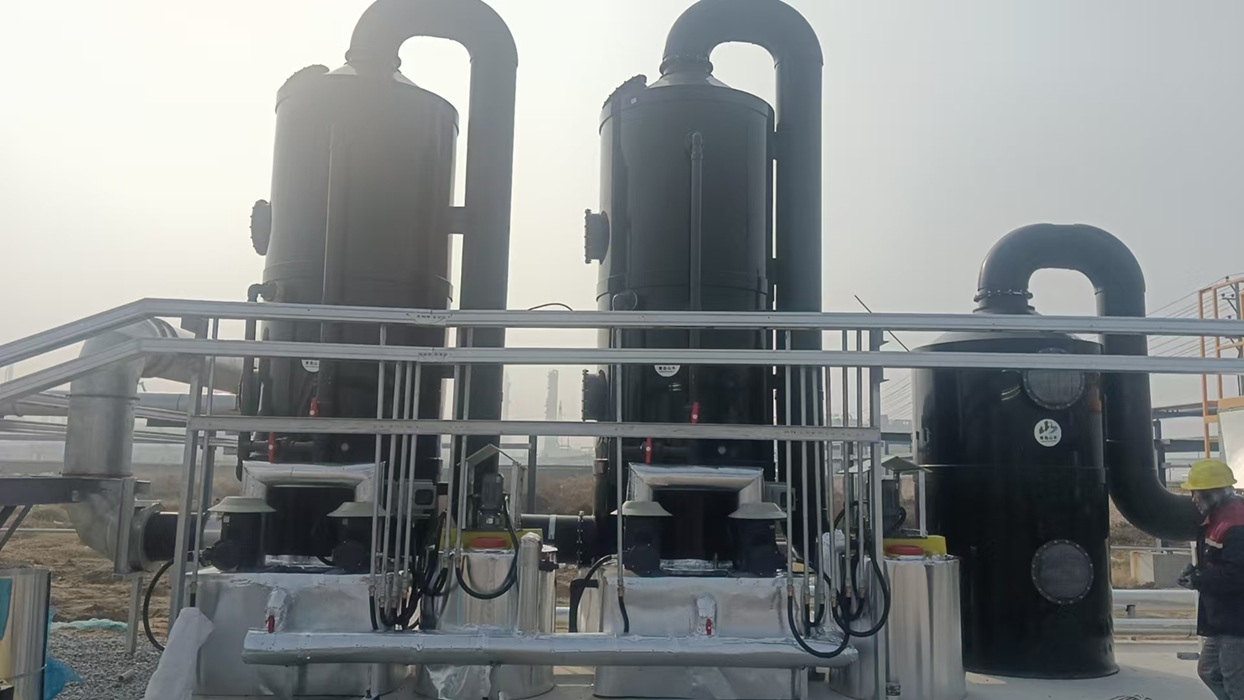
PP antistatic spray tower is a vertical chamber that facilitates mass transfer between a gas stream and a liquid spray for pollution abatement. Its operation is based on direct impingement scrubbing. Wet scrubber Key features include adjustable liquid flow rates, low-pressure drop design, and easy maintenance access for reliable long-term operation. Perfect for chemical processing plants, power generation facilities, and manufacturing operations requiring effective air pollution control solutions.
Technical Parameters
Model | Treatment Air Volume | Ф | H | Purification Rate (90%) | Recommended Water Pump |
SSPL-800 | 2000-4000 | 800 | 6000 | 98% | 32FP-11 |
SSPL-1000 | 4000-5500 | 1000 | 6000 | 98% | 40FP-18 |
SSPL-1200 | 5500-8000 | 1200 | 6000 | 98% | 40FP-18 |
SSPL-1500 | 8000-12000 | 1600 | 6200 | 98% | 50FP-22 |
SSPL-1800 | 12000-17000 | 1800 | 6400 | 98% | 50FP-22 |
SSPL-2000 | 17000-21000 | 2000 | 6500 | 98% | 65FP-26 |
SSPL-2200 | 21000-25000 | 2200 | 6600 | 98% | 65FP-26 |
SSPL-2600 | 25000-32000 | 2600 | 6700 | 98% | 65FP-26 |
SSPL-2800 | 32000-40000 | 2800 | 7000 | 98% | 75FP-26 |
SSPL-3000 | 4000-48000 | 3000 | 7000 | 98% | 75FP-26 |
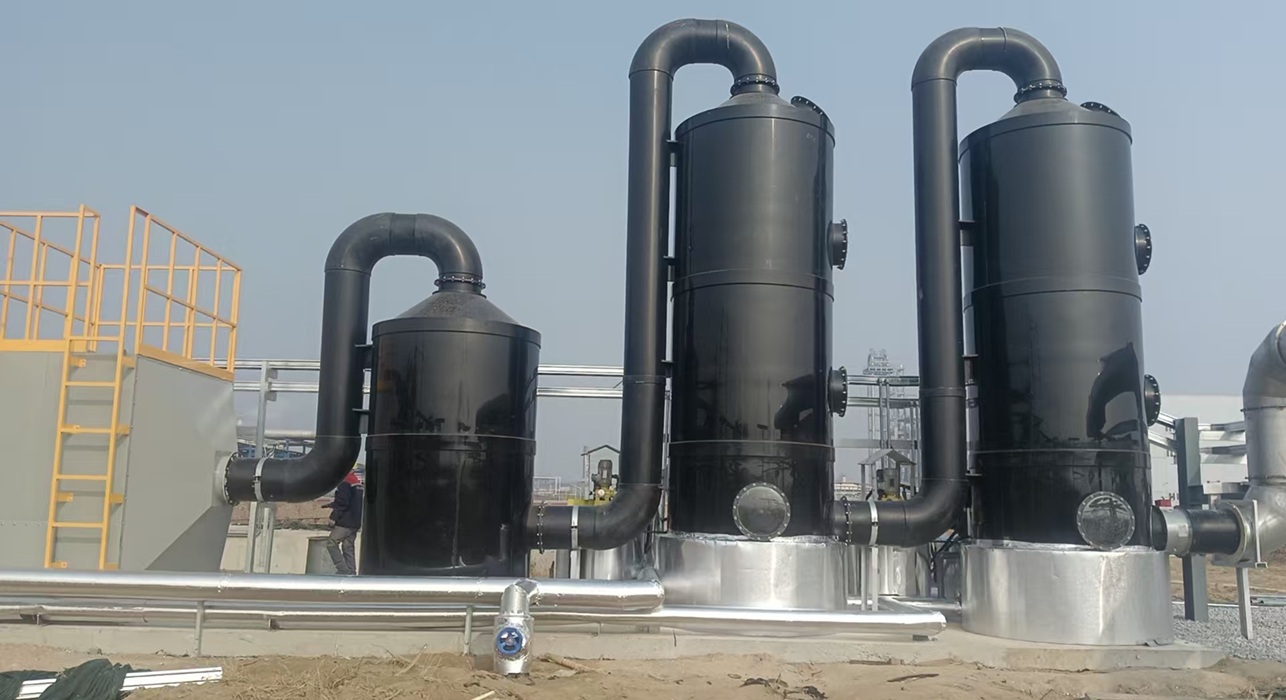
Equipment Structure
The spray tower uses a tower body packing layer as a mass transfer device with gas-liquid two-phase contact elements. The packing support plate is located at the bottom of the packed tower, and the packing is arranged in a stacked manner on the support plate. The packing pressure plate is installed above the packing to prevent upward airflow from blowing it out. The spray tower sprays liquid from the top of the tower, which reaches the packing through a liquid distributor and flows down along the surface of the packing. After the gas is distributed from the bottom of the tower, the liquid continuously flows countercurrently through the gaps in the packing layer. On the surface of the packing, the gas and liquid phases are in close contact for mass transfer. When the liquid flows along the packing layer, there is sometimes wall flow. The wall flow effect leads to uneven distribution of the gas and liquid phases in the packing layer, resulting in a decrease in mass transfer efficiency. Therefore, the packing layer in the spray tower is divided into two parts, with a redistribution device installed in the middle, and then redistributed and sprayed onto the lower packing.
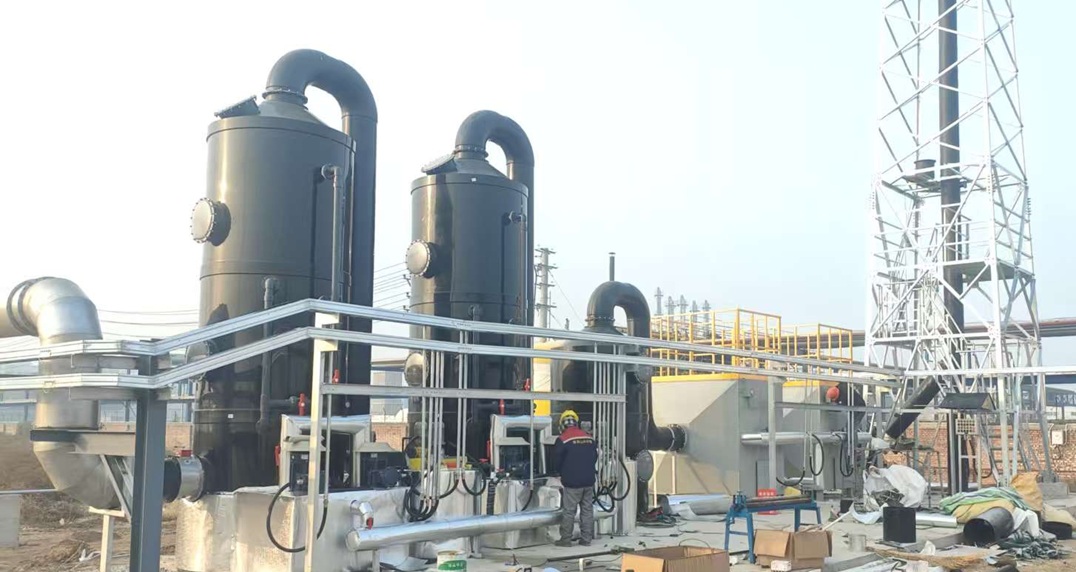
Working Principle
The spray tower introduces acid mist waste gas into the purification tower through a duct. After passing through the packing layer, the waste gas and sodium hydride absorbent come into full contact with the gas and liquid to absorb and neutralize the gas. After purification, the acid mist waste gas is dehydrated and removed by the dust removal plate, and then discharged into the atmosphere by a fan. At the bottom of the tower, after pressurization by a water pump, the absorbent is sprayed down from the top of the tower and then recycled to the bottom of the tower. The purified acid mist waste gas meets national emission standards.
Main Features:
1. High dust removal and desulfurization efficiency; when using alkaline washing water, the desulfurization efficiency can reach 85%.
2. Small footprint and easy installation.
3. Low water and electricity consumption.
4. Corrosion-resistant, wear-free, and long service life.
5. Reliable equipment operation and easy maintenance.

 Send Email
 Whatsapp
 QQ
QQ