
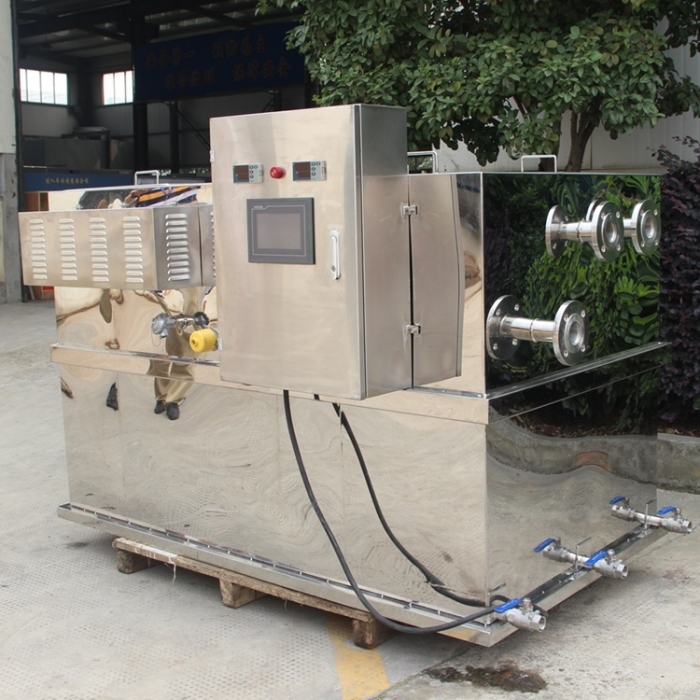
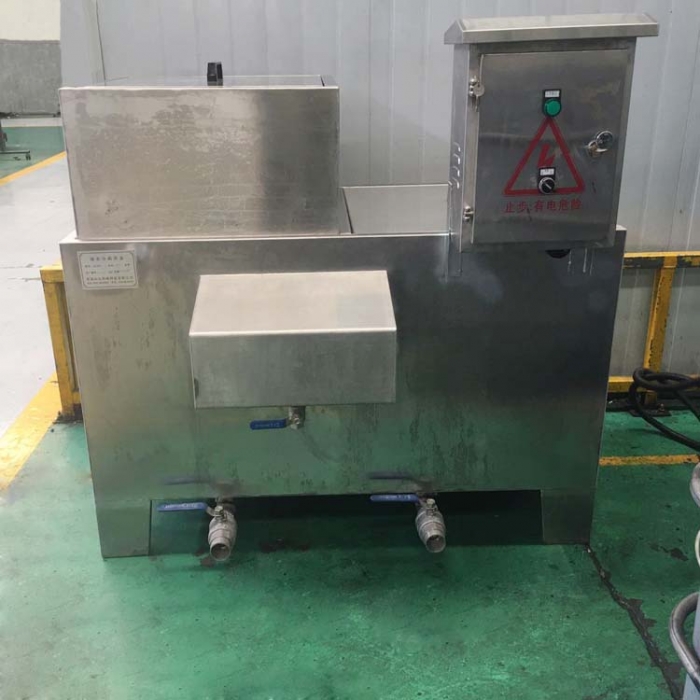
| Name: | Industrial Oil-Water Separator High Efficiency Environmental Protection Equipment |
|---|---|
Product Description
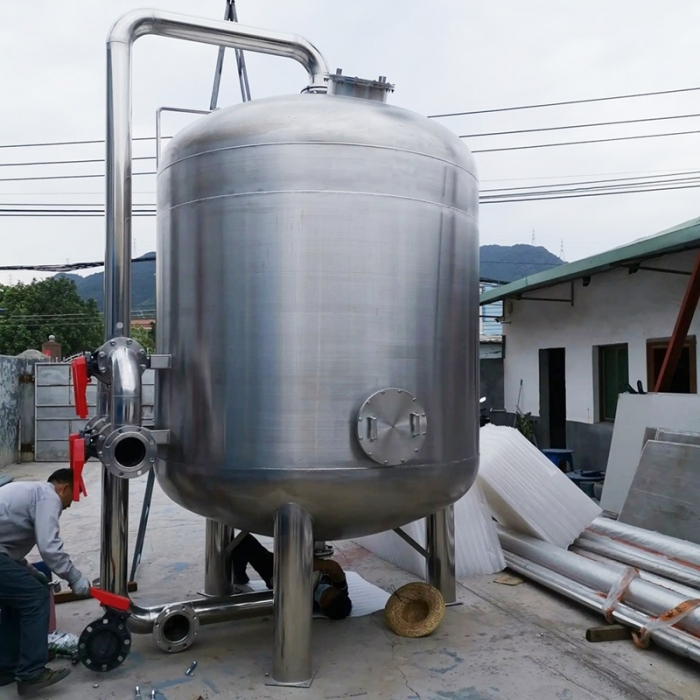
Industrial Oil-Water Separator High Efficiency Environmental Protection Equipment
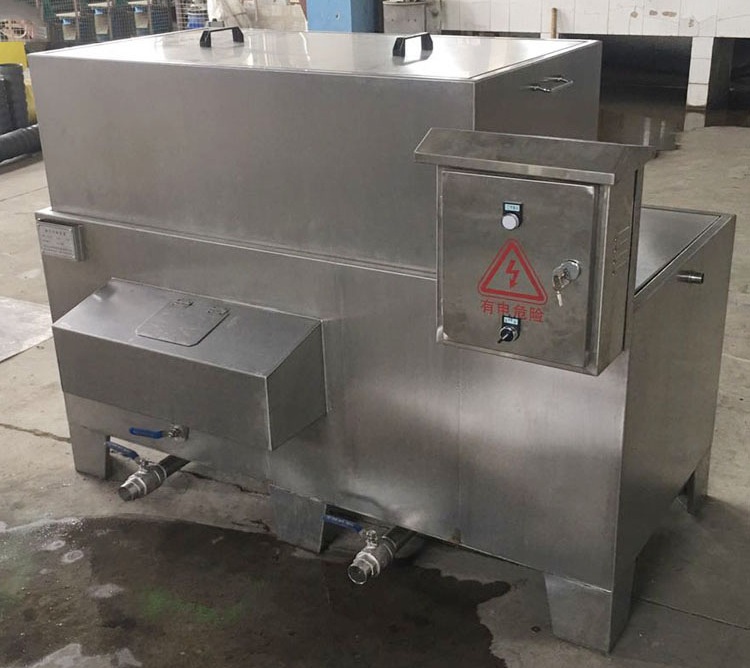
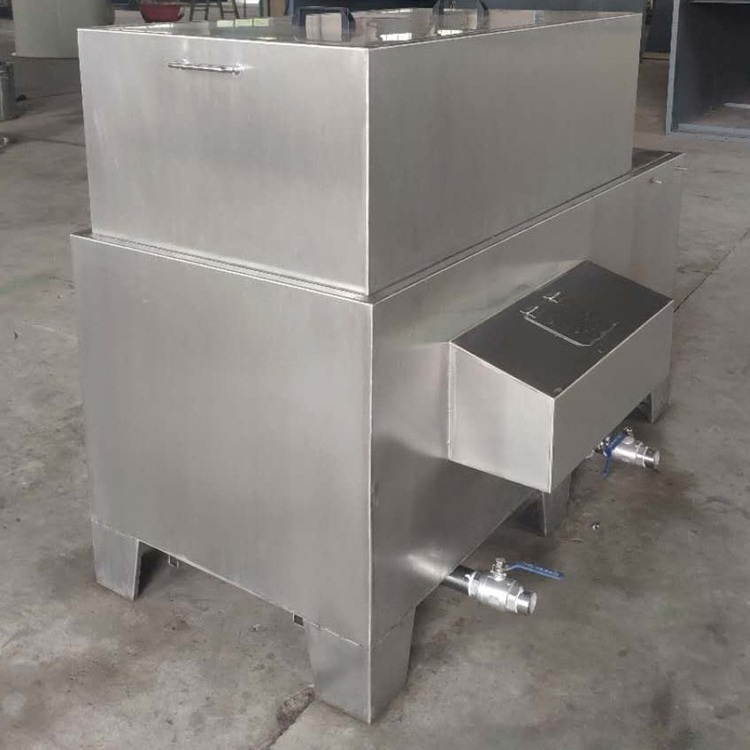
Automatic oil-water separator
Automatic grease traps are intelligent upgrades from traditional grease traps. Through an automated system, they automate processes such as oil-water separation, oil discharge, and sludge removal, significantly reducing manual intervention. They are widely used in catering, commercial complexes, and other similar settings.
Advantages:
1. High Automation: No manual oil removal or timed drainage is required. The sensor + PLC control system enables 24-hour continuous operation, reducing labor costs.
2. Stable Separation Efficiency: Unaffected by human operation, the effluent oil content meets standards, avoiding environmental penalties.
3. Comprehensive Functions: Integrates filtration, separation, oil discharge, sludge discharge, and alarm functions (high oil level, fault indication), with some functions supporting remote monitoring.
4. Flexible Installation: Can be buried, above ground, or wall-mounted, adapting to different site spaces.
5. Energy Saving and Environmental Protection: Physical separation without chemical additives; oil can be recycled (e.g., from waste cooking oil to biodiesel), achieving resource reuse.
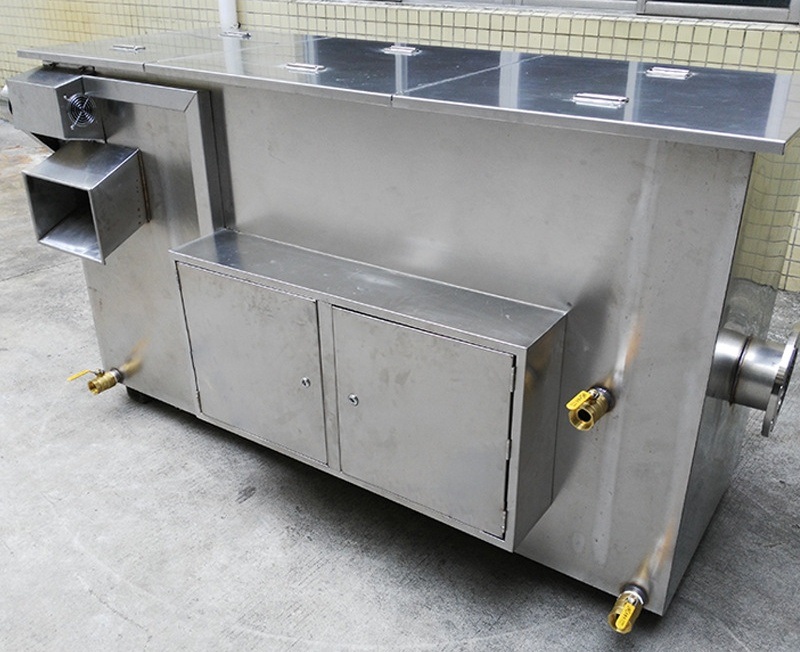
Core Working Principles
1. Pretreatment: Oily wastewater flows in through the inlet and passes through a filter to remove food residue and solid particles (to prevent pipe blockage);
2. Oil-Water Separation: Wastewater enters the separation chamber. Utilizing the density difference between oil and water (oil density 0.85 g/cm³, water density 1 g/cm³), floating oil naturally rises to the surface, while dispersed oil gathers and floats to the surface through inclined plates/honeycomb packing. Some units are equipped with aeration and heating functions (to reduce oil viscosity) or centrifuge devices (to enhance separation efficiency);
3. Automated Oil and Water Discharge: When the floating oil reaches a set thickness, an oil level sensor triggers an oil discharge pump, discharging the oil into an oil collection tank. The separated clean water is controlled by a water level sensor and discharged through a drain outlet to meet standards or for reuse;
4. Sludge Treatment: Sludge deposited at the bottom is periodically discharged through an automatic sludge discharge valve (some units have a sludge tank for periodic cleaning).

 Send Email
 Whatsapp
 QQ
QQ